
Why Your Warehouse Has a Mobile Signal Problem — and What Actually Fixes It
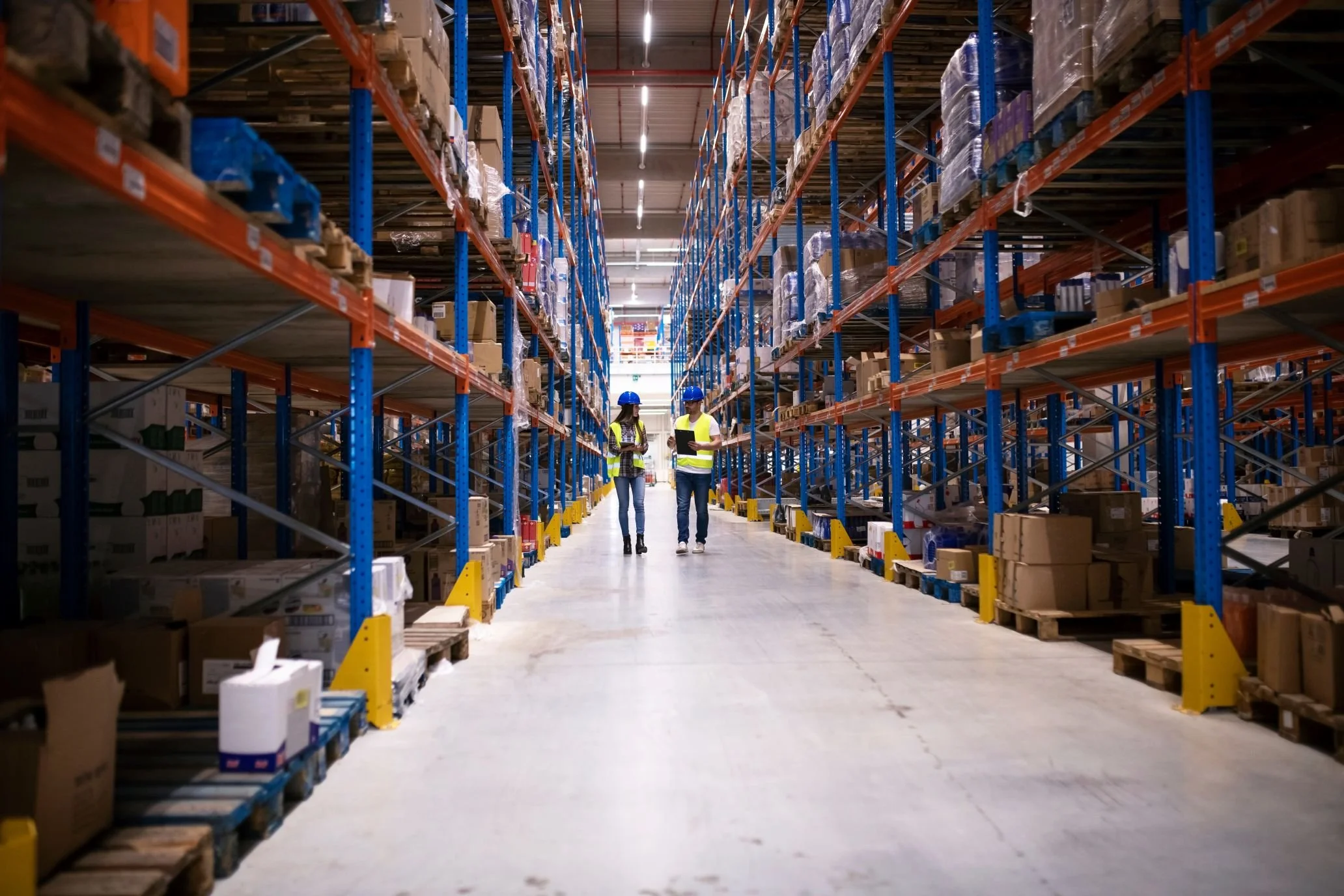
Poor mobile signal inside a warehouse is almost always caused by the building itself, not the network. Steel racking, metal cladding and concrete combine to create a Faraday cage effect that blocks signal from reaching deep into the racking aisles and loading areas, no phone or scanner is powerful enough to fight that from the inside. Fixing it means boosting, distributing or generating a stronger signal indoors, matched to the size and layout of the building. That starts with a site survey, not a guess.
Is this actually a mobile signal problem, or a WiFi problem?
Worth answering before anything else, because the fix is completely different depending on which one it is. If phone calls are dropping and cellular data is patchy, that's a mobile signal problem. The fix is boosting, distributing or generating cellular coverage indoors. If handheld scanners are losing connection but calls are fine, that's more likely a WiFi problem, a separate issue caused by access point placement and interference, not by mobile network coverage at all. Some scanners run on WiFi, some run on a cellular data connection, and it's common for operations teams to describe both as "signal" without realising they're different problems with different fixes. A proper survey identifies which one is actually happening before recommending anything.
Why do warehouses block mobile signal in the first place?
Warehouses are, by construction, close to the textbook definition of a Faraday cage. Steel cladding on the roof and walls reflects and absorbs radio signal rather than letting it pass through. Racking systems, especially high-bay steel uprights and wire mesh shelving, create the same effect at floor level, so signal that makes it through the building envelope can still be blocked row by row. Concrete adds another layer of attenuation on top of that. None of this is a fault or a design mistake; it's what happens when you build a large steel structure and fill it with more steel. The practical result is that outdoor signal strong enough for a phone call in the car park can disappear almost entirely twenty metres inside the building.
What actually fixes it - boosting, DAS or small cell?
There are three real approaches, and which one fits depends on the size of the building, how many people and devices need coverage, and how many carriers need to be supported at once.
| Option | Best for | Watch out for |
|---|---|---|
| Signal boosting | Warehouses where the priority is getting a usable signal indoors quickly. Takes an existing outdoor signal, amplifies it, and rebroadcasts it inside via a donor antenna, amplifier and indoor antennas. | Capacity is limited compared to DAS or small cell, and it only works where there's a usable outdoor signal to amplify in the first place, it can't create coverage that doesn't exist outside. |
| Small cell | Similar use cases to DAS, larger or high-demand sites but delivered as a compact cell site fed by a fibre connection rather than a distributed antenna network. | Needs a fibre connection to the site, and carrier involvement is typically more direct than with a boosted or DAS solution. |
| DAS (Distributed Antenna System) | Larger sites needing multi-carrier coverage and higher capacity, busy floors with a lot of simultaneous devices. Fed from a dedicated signal source rather than an amplified outdoor one, distributed through a network of antennas across the building. | Considerably more expensive to install than boosting, often several times the cost for equivalent coverage, so it needs to be justified by the size and complexity of the site. |
None of these is automatically "the answer" for every warehouse. A 15,000 sq ft single-carrier site and a 150,000 sq ft multi-carrier distribution centre are different problems, and the right technology reflects that.
Is it legal to just install a booster?
Not automatically, and this is the part most guides on this topic skip entirely. Only mobile network operators are licensed to transmit in cellular frequency bands in the UK, installing or using a non-compliant repeater is a criminal offence under the Wireless Telegraphy Act 2006, carrying fines and potential imprisonment, and Ofcom can require a non-compliant device to be removed at your own cost. The exemption that makes boosting legal without direct carrier sign-off only applies to devices that meet Ofcom's UK Interface Requirement 2102 (IR2102), which is exactly why the specific hardware matters, not just the general idea of "getting a booster." Opious deploys Nextivity Cel-Fi hardware, which is built to meet IR2102, as a certified Nextivity partner.
What does the process look like from survey to install?
A site survey comes first, always. This means measuring actual signal strength for each carrier throughout the building (not just at the entrance) to map where coverage is weakest and identify what's causing it: racking layout, roofline, wall construction, or a combination.
The survey result determines the technology, not the other way round. Boosting, DAS and small cell aren't interchangeable options to pick from a brochure; the survey data (building size, carrier mix, device density) points to which one actually fits.
Installation follows the survey plan. Donor antennas go where the outdoor signal is strongest, typically roof-mounted; indoor antennas are placed according to where the survey showed coverage was weakest, not evenly spaced on assumption.
The job isn't done at switch-on. Warehouses change, new racking, new mezzanines, stock levels that shift airflow and reflection patterns so coverage that was right at install can drift over time without anyone touching the equipment.
This sits alongside Opious's wider cellular coverage work, and the same managed approach we use for permanent site infrastructure through managed network services.
If handheld scanners are dropping or staff can't get a call out from the warehouse floor, get in touch with Opious for a straight answer on what's actually causing it.
FAQ
Our mobile signal is terrible inside our warehouse — what's actually causing it? In almost every case, the building itself: steel racking, metal cladding and concrete combine to block cellular signal from reaching the interior, a Faraday cage effect that has nothing to do with which network you're on. A site survey identifies exactly where and why signal drops off in your specific building.
What fixes warehouse mobile signal problems — boosting, DAS or small cell? It depends on the size of the building and how many carriers and devices need to be supported. Signal boosting suits simpler sites; DAS and small cell suit larger, higher-demand or multi-carrier sites. A site survey is what tells you which fits, not the size of the building alone.
Is it legal to install a mobile signal booster in a UK warehouse? Only if the device is compliant with Ofcom's UK Interface Requirement 2102. Installing or using a non-compliant repeater is a criminal offence in the UK, and Ofcom can require removal at your own cost. Nextivity Cel-Fi hardware, which Opious installs as a certified partner, is built to meet this requirement.
Will a signal booster fix scanners that keep dropping connection? Only if the scanners are actually losing cellular signal rather than WiFi. Many handheld scanners run on WiFi, which is a separate problem caused by access point coverage, not cellular network signal. A survey distinguishes between the two before recommending a fix.
Do we need a site survey before installing anything? Yes. The survey is what identifies where signal is weakest and why, and it's what determines which technology (boosting, DAS or small cell) actually fits the building, rather than guessing based on size alone.
How much does warehouse cellular coverage cost? It depends on the technology required, the size of the building and how many carriers need to be covered — a boosted solution for a single-carrier warehouse is a very different cost to a multi-carrier DAS install across a large distribution centre. A site survey is what turns this into an accurate quote.
How long does it take from survey to a working system? This varies by building size and the technology involved, but a survey should happen well before any installation date is fixed, since the survey result determines what's actually being installed.